Closed-loop life support for deep space.
You cannot pack three years of air, water, and food for a crewed mission to the outer system. Survival beyond low Earth orbit depends on recycling almost everything, the science of bioregenerative, closed-loop life support.
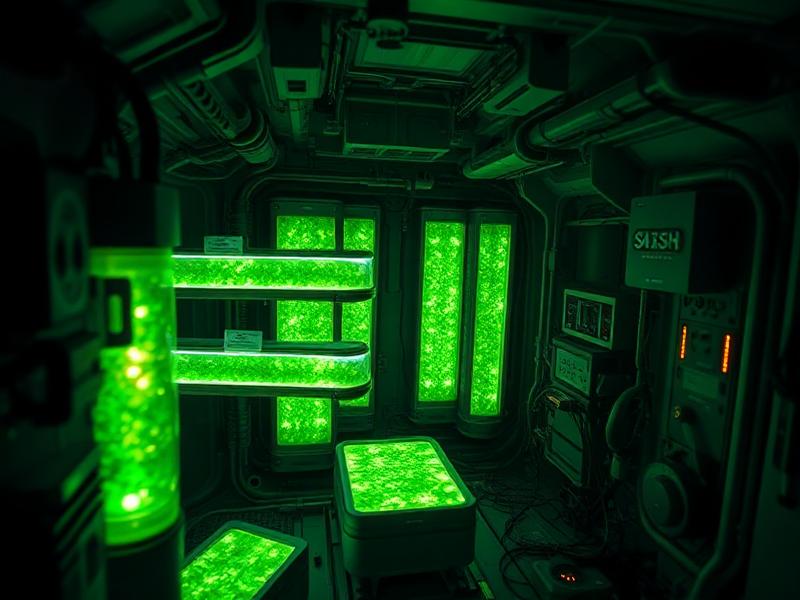
Nothing leaves the system.
Oxygen regeneration
Algae and electrolysis turn exhaled CO₂ and waste water back into breathable oxygen, so the crew is not dependent on finite stored gas tanks.
Total water recovery
Humidity, hygiene water, and urine are filtered and distilled back to potable quality. On long transits, every drop has to be recovered, not resupplied.
Biomass to resources
Microbes and crops convert organic waste into nutrients, growing media, and even food, closing the carbon and nitrogen cycles inside the spacecraft.
Recycling is the difference between visiting and staying.
Resupply works in low Earth orbit because a cargo ship is days away. Beyond the Moon, that lifeline disappears. A mission to Mars or the asteroid belt must carry a miniature, self-balancing biosphere, one that turns waste back into the air, water, and food the crew needs to keep going.
The same closed-loop thinking pays off on Earth. Bioregenerative systems developed for spaceflight inform water recycling, controlled-environment agriculture, and carbon capture, technology built for the void that returns value to the planet.
Explural's bio-research programs engineer these loops, algae, microbes, and crops that recycle air, water, and waste, so that life can travel as far as our spacecraft can.
Keep exploring.
How space propulsion works: a complete guide
Chemical, ion, nuclear, and beyond, the engines that move spacecraft, explained from first principles.
Read →
Living off the land on the Moon: an ISRU guide
How missions mine water, oxygen, fuel, and metals from lunar regolith instead of launching them from Earth.
Read →
Tritium vs. helium-3 for fusion energy
How the two leading fusion fuels compare on scarcity, yield, and why the Moon settles the debate.
Read →