The economics of reusable spacecraft.
For sixty years, rockets were thrown away after a single flight. Reusability rewrites that math, and with it the entire business case for reaching orbit. Here is why flying the same hardware again is the most important cost lever in spaceflight.
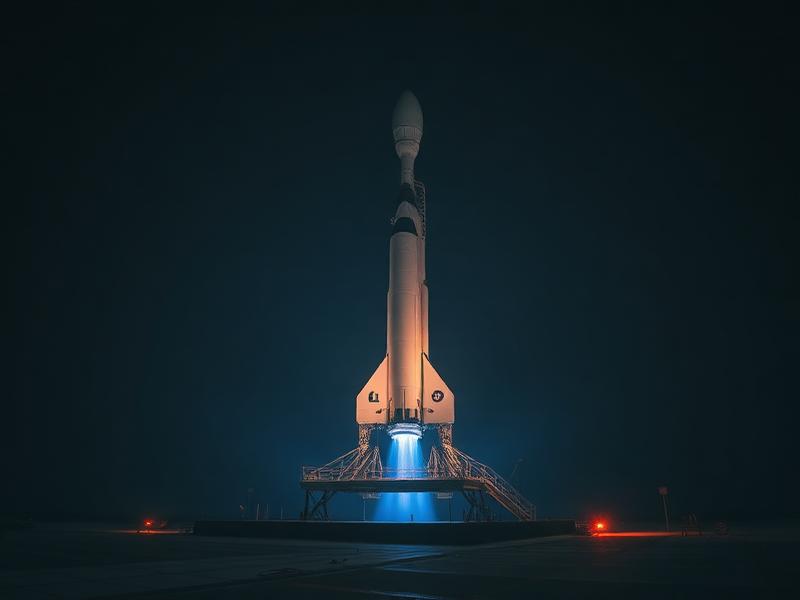
What actually makes reusable cost-effective.
Amortized airframes
An expendable booster is written off after one flight. A booster flown ten times spreads its build cost across ten missions, the single largest lever on price per launch.
Refurbishment, not rebuild
The cost that matters is inspection and refurbishment between flights. Designing for fast, predictable turnaround is what separates a reusable program from one that merely lands hardware.
Flight rate compounds
Fixed costs, factories, crews, pads, are paid whether you fly once or fifty times a year. High cadence is what turns a low marginal cost into a low average cost.
Affordable access changes what is worth doing in space.
When the cost of a kilogram to orbit falls by an order of magnitude, missions that were once unthinkable become routine. Larger telescopes, denser satellite constellations, in-space manufacturing, and crewed deep-space transits all depend on a launch market where mass is no longer the binding constraint.
Reusability is also a sustainability story. Recovering and reflying hardware avoids the energy and materials of building every vehicle from scratch, lowering the carbon footprint of each mission, the same circular logic Explural applies across its bus, propulsion, and ground systems.
At Explural, reusability is not a feature bolted onto a design. It is the starting assumption: recover, refurbish, refly, and let the economics compound.
Keep exploring.
How space propulsion works: a complete guide
Chemical, ion, nuclear, and beyond, the engines that move spacecraft, explained from first principles.
Read →
Living off the land on the Moon: an ISRU guide
How missions mine water, oxygen, fuel, and metals from lunar regolith instead of launching them from Earth.
Read →
Tritium vs. helium-3 for fusion energy
How the two leading fusion fuels compare on scarcity, yield, and why the Moon settles the debate.
Read →