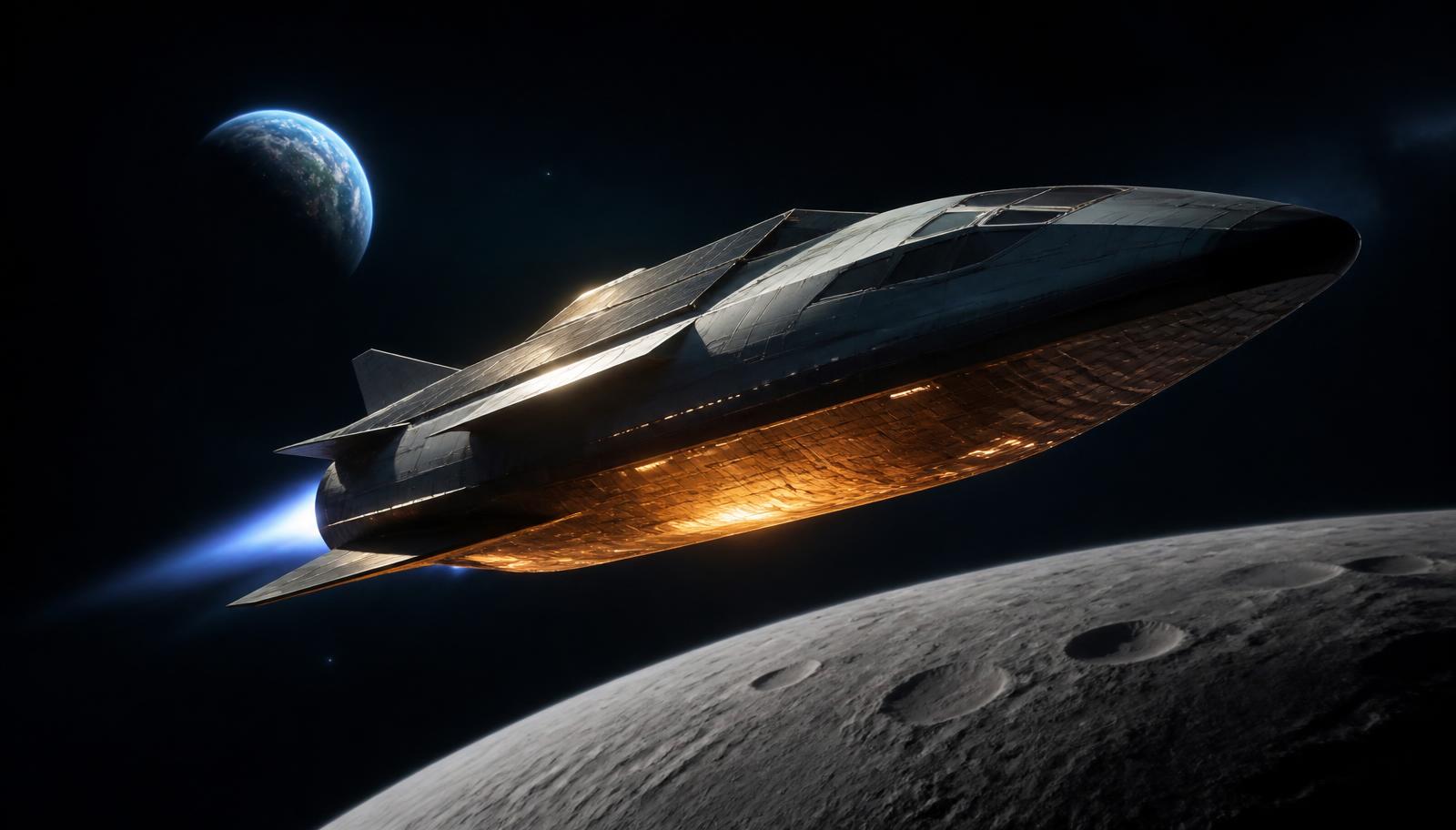
Phoenix
A reusable crewed spacecraft for return transit between Earth orbit and the lunar surface. Thermal-armored, restartable, and sized to come back again.
Reference Specification
- Class
- Crewed cislunar transport
- Crew capacity
- 4 to 6 (concept)
- Crew + cargo to LLO
- 8 t (concept)
- Propulsion
- LOX / LH2, restartable
- Thermal protection
- Reusable tiled heat shield
- Return mode
- Direct Earth entry or orbital docking
- Autonomy
- Crew-supervised, autonomous fallback
- Status
- Concept development
- Design life
- 50+ return flights (target)
Figures are concept-level targets from an ongoing study, not flight hardware performance.
What makes the vehicle different
Built to return
Phoenix is designed around the return leg: thermal tiles, distributed heat rejection, and an entry profile that can bring crew and samples back to Earth more than once. Rebirth is not a metaphor; it is the flight envelope.
Crewed, not crew-dependent
Operators can override at any point, but ascent, rendezvous, descent, and landing are designed to complete autonomously. That reduces crew workload and makes the same vehicle useful for uncrewed cargo runs when people are not aboard.
Surface sorties from orbit
Phoenix pairs with an orbital outpost or propellant depot. The crew descends, operates on the surface, then returns to the same orbiting habitat. The vehicle becomes a shuttle that multiplies the value of a fixed station.
Fueled by the Moon
Long term, the goal is to refuel Phoenix with oxygen and hydrogen produced on the lunar surface. A return-capable craft that can tank locally changes the mass math: every flight carries capability back to Earth instead of throwing it away.
Where it fits
Phoenix is the crewed link in the cislunar logistics loop. Extearier moves cargo and raw resources; Phoenix moves people, science payloads, and high-value samples. Together they form a round-trip economy: materials flow one way, capability and crew flow back.